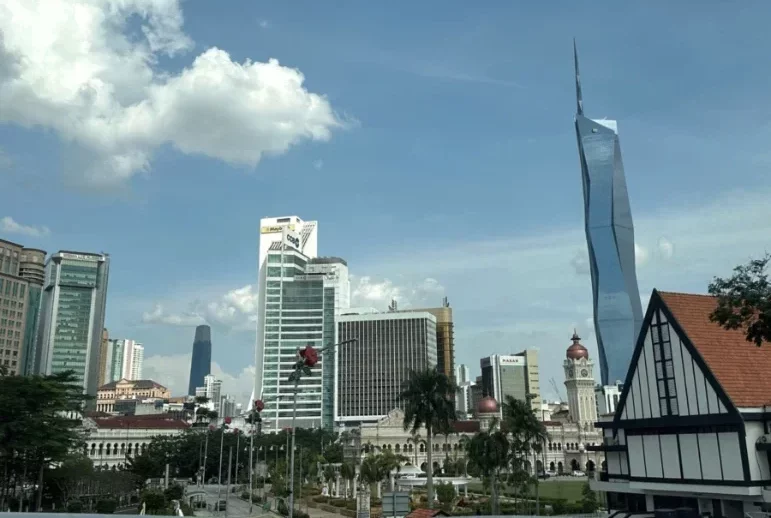
As geopolitical instability and deglobalization trends continue to reshape global markets, the global Islamic economy continues to show remarkable growth and resilience.
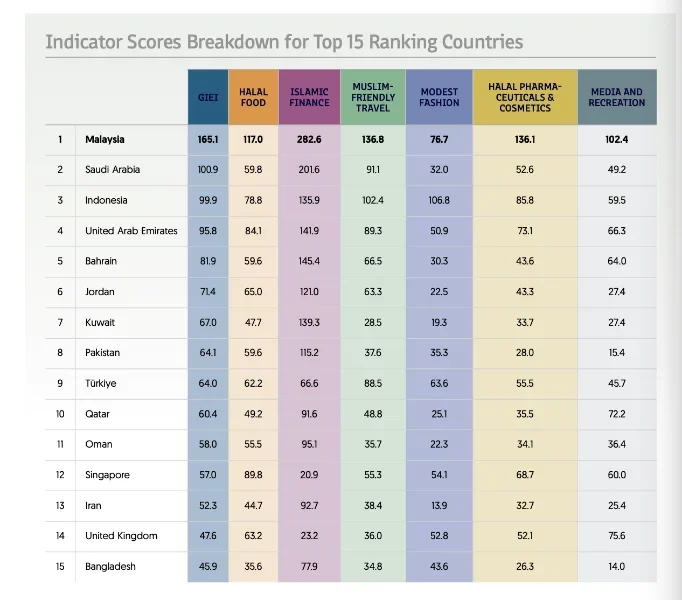
Malaysia recently secured top spot as the world’s strongest Islamic economy according to The State of Global Islamic Economy Report 2024/25 by DinarStandard. Meanwhile many OIC countries are responding with alliances in addressing challenges and opportunities for businesses and governments operating within the Islamic economy space.
This holistic survey is represented by US$2.43 trillion of consumer spending by 2 billion Muslims across six real-economy sectors of Halal food, Modest Fashion, Muslim-friendly travel, Media & Recreation, Halal Cosmetics, and Halal Pharma.
With a theme of “From Crisis to Catalyst: Evolving Islamic Economy Opportunities,” the report also highlights how Muslim consumers, particularly youth, are driving significant innovation and economic developments across multiple sectors, leading to benchmark setting worldwide.
Government Leadership – Malaysia Tops The List
Malaysia remains the leading national ecosystem that supports Islamic economy business activities, followed by Saudi Arabia in 2nd place and Indonesia in 3rd place.
Continuing the spur of Islamic economy development are:
- Malaysia’s Department of Islamic Development (JAKIM) leads the country as well as globally on Halal-certification.
- Islamic Tourism Centre (ITC) and the Malaysian Budget and Business Hotel Association (MyBHA) signed an MoU to support the Association’s members in obtaining the Muslim-Friendly Tourism and Hospitality Assurance and Recognition from ITC.

- AEON Bank, the first digital Islamic Bank in Malaysia, was launched in 2024. Malaysia is among the fastest-growing e-commerce markets, with a year-on-year growth rate of 18%.
- Malaysia Digital Economy Corporation (MDEC) has launched the Digital Tourism Innovation Lab to advance digital transformation in Malaysia’s tourism sector.
Growing Young Muslim Population Drivers For the Halal Economy
Muslim Youth (aged 15-29) of Gen Z and Millennials constitute a significant segment (27.8%) of the global Muslim population, which is rapidly growing and currently stands at over two billion.
With Islamic values shaping both lifestyle choices and consumption patterns, this ongoing growth of Muslim Youth remains key to the halal economy expansion worldwide.
This trend is particularly pronounced in the Asia-Pacific and MENA regions, where the majority are Muslims (70-90%).
Affluence of Muslim Consumers
The combined GDP of OIC (Organization of Islamic Cooperation) is set to expand by 1.6% and reach about US$5.4 trillion due to the consistent rise in consumer spending across OIC member states.
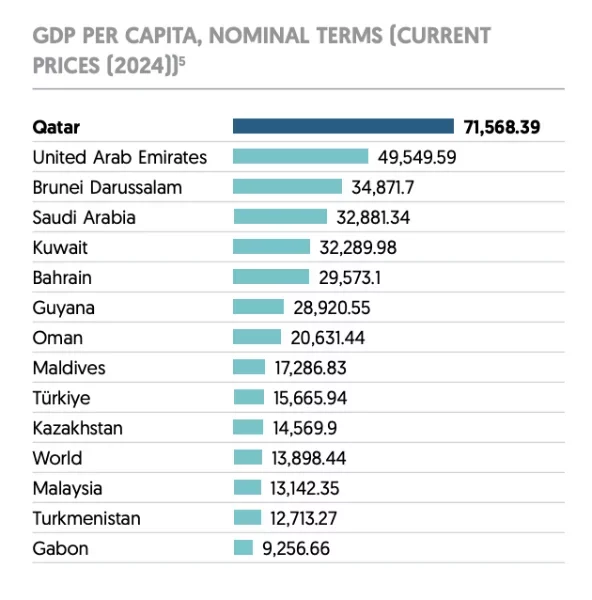
Several Muslim-majority countries, such as Brunei and Guyana have GDP that exceeds the global average. This signals the expanding halal market opportunity.
Geopolitical Instability and Deglobalization
Regional Conflicts and Political Instability are a big factor in the growth of Islamic Economies. Unresolved conflicts in the Middle East, such as the Gaza-Israel tension, and ‘America First’ protectionist trade policies, have heightened economic volatility and shifting trade alignments.
This ongoing political instability is expected to impact OIC countries on trade, energy security, and investments.
This trend is expected to persist, further evidenced by the influence of economic alliances such as BRICS, shifting a multipolar world.
The impact of deglobalization is evident in the reshoring trend in several OIC countries, such as Malaysia and Indonesia, which is projected to become the world’s fourth-largest economy by 2030.
Leading The Shift: Halal Food & Beverages
With Halal food always at the forefront of this transition, and constituting the largest sector within the Islamic Economy, a new market dynamic is emerging, substituting Western brands.
This indicates that consumer habits of embracing businesses that reflect their Islamic values may stick.
Some examples are:
- Malaysia pushed local brands to the forefront, with ZUS Coffee opening 200 outlets and expanding internationally. Consumers switching from premium brand Starbucks reported a net loss of RM91.5 million for 2024 fiscal year. Same goes to confectionery local brand Beryl’s chocolate whereby survey indicated that 58% are shifting to local.
- Indonesia’s Almaz Fried Chicken have picked up this pattern and expanded to 37 outlets nationwide. They attributed their success to customers “actively choosing local alternatives”.

Muslim-friendly Travel – Medical Tourism, Halal Cruise & Travel Tech
Despite declining investment levels, this economic driver remains substantial. Innovation in halal-friendly infrastructure and digital services. Saudi Arabia, in particular, is a testament to this.
The Muslim-friendly travel market value is projected to reach US$384.12 billion in 2028, from US$216.94 billion in 2023.
Expected to regain momentum in the coming year, the need for tailored travel experiences, including halal dining, prayer facilities, and culturally sensitive accommodations, will continue to rise.
- Authentic, culturally themed travel brands: Saudi Arabia’s Aroya Cruises partnered with Malaysia’s IslamiCruise International to launch a 26-night chartered voyage, with stops in Salalah (Oman), Male (Maldives), and Banda Aceh (Indonesia), offering Muslim-friendly recreational activities and entertainment, in addition to congregational prayers and religious lectures. Its inaugural voyage from Jeddah to the Red Sea in December 2024, offering Arabian-themed luxury rooted in Islamic values. Cruise Saudi aims to attract 1.3 million passengers annually by 2035 and expand its routes to 10 destinations by 2030

- Halal Medical Tourism is on the rise: Malaysia-based startup MedTrip launched a digital platform that connects patients to cross-border medical services, offering personalized doctor/hospital recommendations and medical cost estimations
- Halal-conscious Travel Tech: Turkiye’s HalalBooking raised US$10 million in a Series B angel funding round at a valuation of US$125 million and is in talks with institutional investors for a larger Series C round in 2025.
A challenge, however, is that today’s travelers expect seamless and hyper-personalized experiences in hotel stays, transportation, and itinerary planning.
Companies that fail to integrate smart solutions and digital convenience will risk losing market share to competitors that prioritize tech-driven travel experiences.
Modest Fashion – Indonesia Takes The Lead, Meanwhile Malaysia Remains No. 1 for Halal Cosmetics
Modest fashion and Halal Cosmetics are the top choice for the realignment happening among Muslim consumers choosing products that reflect their ethical and religious values.
- Indonesia, tops the first position for Modest Fashion, whereby the entire Muslim consumer modest fashion market is represented by US$326.95 billion and is expected to reach US$433.28 billion by 2028.
- In line with Indonesia’s motivation to become the global hub for modest clothing, the country’s brands, such as Zoya, are gaining traction and going mainstream. ButtonScarves was named Asia’s Best Performing Company in 2024 at the ACES awards.
- Malaysia remains the No. 1 global player in Halal cosmetics. By 2028, Muslim consumer spending on cosmetics is set to reach US$118 billion.
- Watsons, Asia’s largest beauty and health retailer, is expanding into GCC markets of Bahrain and Kuwait after securing 53% more sales in 2023.
- Meanwhile, Saudi Arabia is emerging and expanding its beauty and fragrance industry, whereby a recent Al Majed Oud raised IPO for USD 188 million within hours.
What’s Your Favorite Halal / Muslim-friendly Brand? Share with us!
With the growing global attention of Halal-conscious consumer, the future outlook illustrates an emerging pattern of reduced dependency on Western brands and supply chains.
This is significant through the purchasing behaviors of the rising Muslim Youth, influenced by triggering resistance to immediate geopolitical contexts, shifting towards brands promoting ethical responsibility, and cultural authenticity.
Which section of the Halal economy are you particularly championing for? And what brand in particular? Share with us!

![Ruhfar Ramadan Souq + Raya Ready 2026 Guide [Digital Edition]](https://ruhfar.com/wp-content/uploads/2026/02/raya-ready-guide-cover-e1772021833917-300x300.webp "Ruhfar Ramadan Souq + Raya Ready 2026 Guide [Digital Edition]")